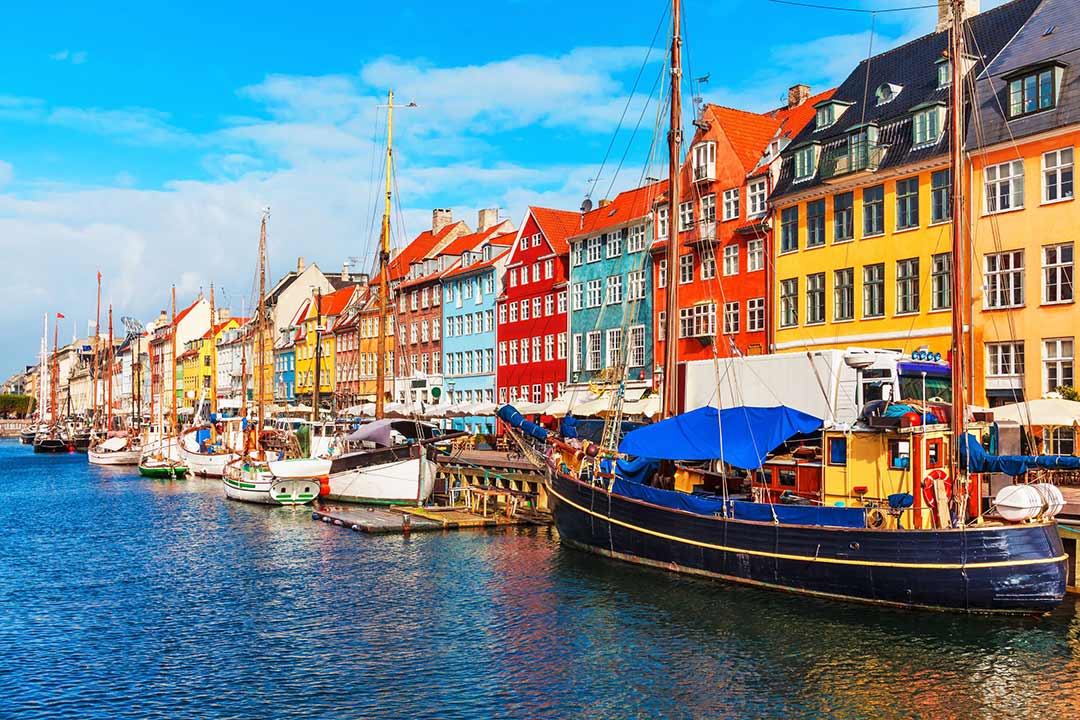
There were plenty of friendly faces gathered at London’s Heathrow Terminal 5 on 10 March 2026, setting off for another thoroughly enjoyable few days together—this time in Copenhagen and Malmö. The weather was kind with plenty of sunshine and not too cold. The NH Collection Hotel in Copenhagen with its wonderfully helpful young staff proved to be an excellent choice and we had a most comfortable stay there.
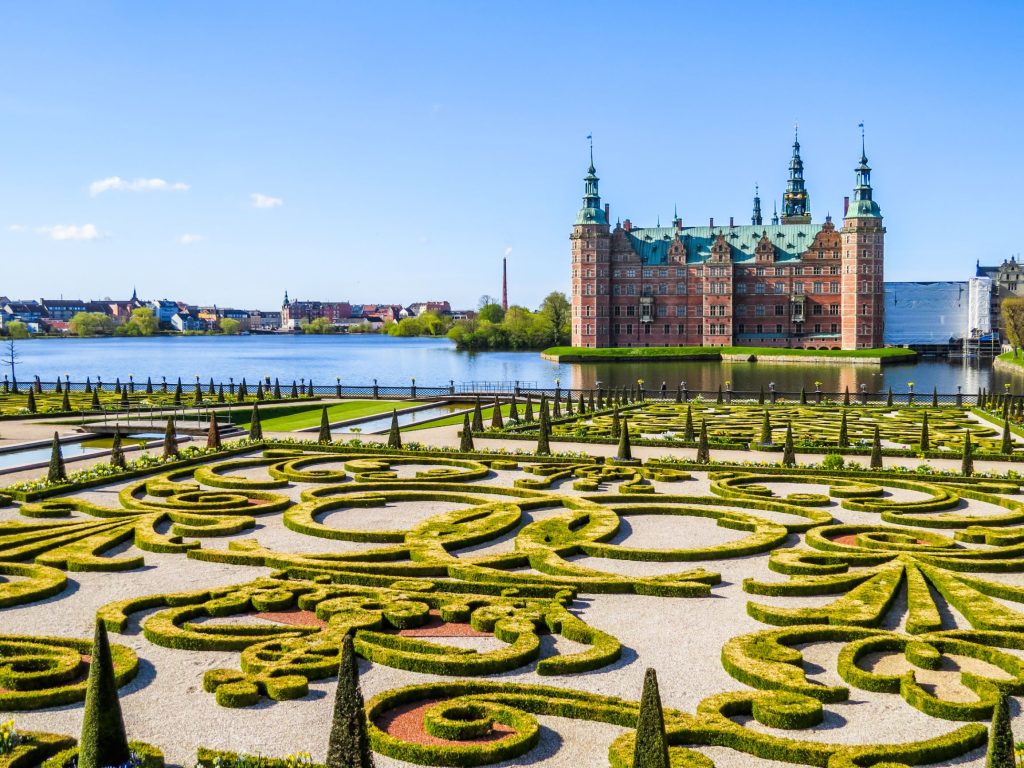
As always, there were plenty of interesting conversations and laughter over relaxing meals and drinks. First at the hotel, followed by another on the top balcony in the very striking opera house Restaurant Almanak. It has some of the best views of Copenhagen. Then, in the Rabarbegaarden Restaurant in the glorious grounds of Frederiksborg Castle 30km north of Copenhagen – a stunning building and the largest Renaissance complex in the Nordic region.
Day 2 Rigoletto at Copenhagen’s Royal Danish Opera (Det Kongelige Teater).
This was a musically strong if a rather conservative Rigoletto – very pleasing if you value vocal excellence and a traditional approach, less so if you’re looking for a bold or radically reimagined production. It drew mixed-to-positive critical responses from Musica Europa’s Opera Club members, the consensus being that it was musically rewarding with clear story telling but theatrically more restrained.
Day 3 Danish National Symphony Orchestra (Finnish Conductor Jukka-Pekka Saraste) Bluebeard’s Castle – Concert Performance Mezzo -Soprano – Dorottya Lang (Judith). Bass – Miklós Sebestyéni (Bluebeard)
The Danish Radio Koncerthuset is deservedly praised for its exceptionally clear acoustics and immersive orchestral balance, qualities that are particularly crucial in Bartók’s score, where colour and texture are the drama. Thus, the hall itself played a decisive role in this impressive performance with the huge orchestra focussing on Bartok’s orchestral storytelling. Not a spectacle but a deeply concentrated musical experience. The opera’s emotional core rests entirely on its two singers and strong performances hinge on Judith’s curiosity shifting from warmth to obsession and Bluebeard, balancing menace with vulnerability. Given Dorottya Lang’s reputation in this repertoire and Sebestyén’s dark-toned bass, the casting was a good pairing focussing on real human emotions rather than flashy, dramatic tricks.
Sibelius Symphony No 4 Sibelius’s Fourth is widely regarded as his “darkest and most unsmiling” symphony, marked by ambiguity and emotional restraint rather than overt drama. Saraste leaned fully into this quality. He is a conductor who favours clarity over overt expressiveness, and here that instinct paid dividends.The Danish National Symphony Orchestra played with impressive discipline, precision and colour. In a hall renowned for clarity, inner textures were unusually audible. This mattered: Sibelius’s writing often depends less on melody than on shifting sonorities and harmonic tension. This was a serious, unsentimental, and ultimately compelling account of one of Sibelius’s most difficult works – a compelling and absorbing performance.
Day 4 Mälmo
First a short coach journey along the famous combined tunnel and bridge that connects Copenhagen with Mälmo – a terrific feat of engineering. While Mälmo might be considered a low-key destination it is definitely worth a visit when a night at the opera to see Carmen is included. We were able to check in at the Scandic Hotel at 10am, a very welcome surprise. Agneta, our guide, led us on a gentle guided tour to Gamla Staden (old town) with its cobblestone streets, colourful half-timbered houses, small alleys and squares such as Lilla Torg & Storget. The tour concluded with lunch at the atmospheric Arstidena Restaurant, a historic 16th century vaulted cellar.
Carmen at Mälmo Opera House This 2026 production of Carmen at Malmö Opera presented a modern, socially focused reinterpretation of Bizet’s classic and famously vibrant score. Directed with an emphasis on male violence against women, the staging introduced contemporary elements, such as an added knife attack during the overture, to frame the story as a commentary on gender-based violence. Musically, the performance was first rate, with a young and able cast. The title role, sung by Portuguese mezzo-soprano Claudia Ribas, was full of vocal richness and stage presence, bringing nuance.
Overall, the production was thought-provoking: critics praised it for its relevance and clear thematic focus but was criticised by some for lacking the traditional passion, colour, and sensuality associated with Carmen.